


Blog
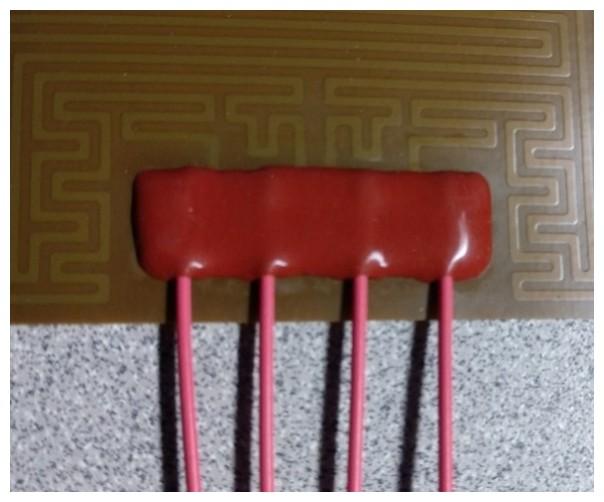
NASA-Qualified Flexible Heaters for Spaceflight: Minco Introduces Low-Outgassing Flexible Lead Wire Encapsulation
Spacecraft thermal control systems operate in some of the most demanding environments imaginable. From launch vibration and extreme temperature cycling to vacuum conditions and years of continuous operation, every component must be engineered for exceptional reliability.
For aerospace engineers designing satellites, spacecraft, scientific instruments, propulsion systems and other mission-critical hardware, Minco has introduced a new low-outgassing flexible lead wire encapsulation for its all-polyimide flexible heaters.
Developed in collaboration with NASA, this innovative lead termination design has been approved to NASA S-311-P-841, the NASA specification covering flexible electric resistance heaters for spaceflight applications.
The result is a highly conformable, lightweight NASA-qualified flexible heater solution designed to improve reliability at one of the most mechanically vulnerable areas of a flexible heater: the lead wire termination.
Why Lead Wire Terminations Matter in Spaceflight Heaters
Flexible heaters are commonly bonded or mounted directly to spacecraft components to provide precise, uniform thermal control. While heater watt density, resistance and operating temperature are important design considerations, the point where the electrical leads exit the heater can also have a significant effect on long-term reliability.
Traditional hardened epoxy lead terminations can create a relatively rigid area at the lead exit.
This becomes particularly important when a flexible heater must be installed on a curved or non-planar surface. Mechanical stresses can develop during installation, launch vibration, movement or repeated thermal cycling.
Minco's new flexible lead wire encapsulation was specifically developed to address these challenges.
Instead of the standard hardened epoxy construction, Minco uses a proprietary low-outgassing flexible encapsulation developed as a specialized revision to NASA S-311-P-841 specification section 3.4.1.5.
The flexible termination is designed to:
- Improve strain relief at the heater lead exit
- Better conform to curved and non-planar mounting surfaces
- Maintain flexibility and adhesion through extreme temperature cycles
- Reduce mechanical stress during installation and handling
- Better accommodate movement and vibration
- Reduce the potential for cracking or delamination
- Improve long-term reliability in demanding spaceflight environments
For spacecraft engineers, these improvements can help address a potential mechanical failure point while maintaining the advantages of an extremely thin and lightweight flexible heater.
Designed to NASA S-311-P-841
Minco worked with NASA during development and qualification of the flexible lead termination technology.
The resulting heater construction is NASA S-311-P-841 compliant and has successfully completed both Group A Quality Conformance Inspection and Group B Qualification Testing.
Group A testing included:
- Visual inspection
- Resistance testing
- Insulation resistance
- Voltage conditioning
- Thermal shock
- Dielectric strength testing
Group B qualification included:
- Voltage conditioning
- Thermal shock
- Low-temperature operation
- Lead pull testing
- Life testing
- Required electrical testing
This extensive qualification provides aerospace engineers with a proven heater construction developed specifically for demanding spaceflight applications.
Low-Outgassing Materials for Vacuum and Space Environments
Material selection becomes particularly important when components are used in vacuum environments.
Materials that release volatile compounds can potentially contaminate sensitive spacecraft components, including optical systems, detectors and other instrumentation.
Minco's flexible lead wire encapsulation is therefore engineered specifically for low-outgassing spaceflight applications.
The construction is designed to meet or exceed:
- Total Mass Loss (TML): <1.0%
- Collected Volatile Condensable Material (CVCM): <0.1%
The heater is designed for low outgassing in accordance with ASTM E595, making it suitable for applications where vacuum compatibility and contamination control are important design considerations.
Thin, Lightweight All-Polyimide Construction
The flexible termination is incorporated into Minco's custom all-polyimide flexible heater construction.
Polyimide provides an excellent combination of flexibility, thermal stability, chemical resistance and low mass, making it particularly well suited to aerospace thermal-control applications.
Typical heater thickness is only 0.005 to 0.010 inch (0.13 to 0.25 mm).
This extremely thin construction allows a heater to be installed directly onto components while adding very little size or mass—an important advantage in spacecraft and satellite systems where both weight and available space are tightly controlled.
Custom Aerospace Heaters for Mission-Specific Requirements
Spaceflight thermal-control applications rarely have identical requirements. Heater geometry, resistance, voltage, wattage, mounting method and lead configuration may all need to be optimized for the particular spacecraft component.
Minco flexible heaters can therefore be manufactured in custom sizes, shapes and wattages to meet application-specific requirements.
Available design characteristics include:
Substrate:
Polyimide (Minco Type AP)
Typical thickness:
0.005–0.010 in. (0.13–0.25 mm)
Power density:
Up to 120 W/in² depending on construction and mounting method
Operating temperature:
-115°C to +220°C, with the mounting method affecting the allowable temperature range
Resistance tolerance:
±10% standard, with ±5% and ±2% available upon request
Voltage:
5 V to 120 V, depending upon heater size and resistance
Lead wire options:
Kapton-insulated, Teflon-insulated and custom cable configurations
Lead termination:
Low-outgassing flexible epoxy encapsulation
Mounting options:
Space-rated pressure-sensitive adhesive, mechanical clamping or bonded installation
These options allow the heater to be engineered around the thermal and mechanical requirements of the spacecraft rather than forcing the spacecraft designer to accommodate a standard heater configuration.
Applications for NASA-Qualified Flexible Heaters
Minco's NASA-approved flexible heater construction can be considered for a wide range of aerospace and spaceflight thermal-management applications, including:
- Satellites
- Deep-space probes
- Planetary and lunar landers
- Avionics thermal control
- Battery warming and thermal management
- Propulsion system warming
- Optical instruments
- Scientific instruments and payloads
- Spacecraft electronics
- Communication equipment
- Spacecraft mechanisms
- Temperature-sensitive structures
- Commercial spacecraft
- Low Earth Orbit (LEO) systems
- Deep-space exploration hardware
Essentially, any application requiring a lightweight, highly reliable, low-outgassing flexible heater for vacuum or space environments may benefit from this construction.
Improved Conformability for Curved Spacecraft Surfaces
One of the particularly important advantages of Minco's new encapsulation technology is its ability to accommodate curved surfaces.
Flexible heaters themselves can readily conform to complex shapes, but a conventional rigid lead termination can limit flexibility near the lead exit.
Minco's flexible encapsulation helps maintain the heater's conformability through this critical transition area.
This can be particularly useful for heaters installed on cylindrical housings, curved instrument surfaces, propulsion components, optical assemblies and other non-planar spacecraft structures.
Reducing Qualification Risk for Aerospace Engineers
Qualification can represent a significant portion of the development effort for spaceflight hardware.
Using a heater construction that has already undergone qualification testing to NASA S-311-P-841 can give engineering teams a proven starting point when developing a new thermal-control system.
Minco's flexible lead wire encapsulation combines the advantages of a thin-film flexible heater with a lead termination specifically engineered for the mechanical, thermal and vacuum conditions encountered in spaceflight.
For aerospace OEMs, spacecraft designers and thermal engineers, this can help reduce technical risk while providing greater design flexibility.
Download the NASA-Qualified Flexible Spaceflight Heater Datasheet
MOD-TRONIC Instruments supplies Minco custom flexible heaters for aerospace and spaceflight applications and can assist with selecting or developing a heater for your specific thermal-control requirements.
For complete specifications, qualification information, available configurations and performance data:
Download the Minco NASA S-311-P-841 Flexible Spaceflight Heater Datasheet
Minco custom flexible AP heaters can be manufactured to your exact specifications, including custom dimensions, shapes, resistance, wattage, voltage, lead wires and mounting configurations.
Contact MOD-TRONIC Instruments to discuss your aerospace or spaceflight flexible heater application.



